
Blockbuster: Arcade
Gimica GmbHPuzzle
4.61.57K Reviews
- Version
- 1.9.0
- Installs
- 1.00M
- Age Rating
- Everyone
Screenshots
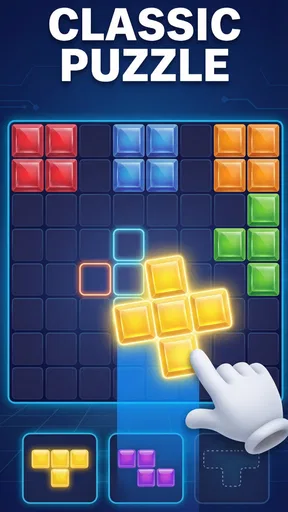
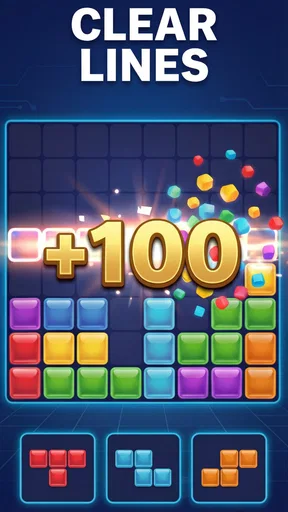
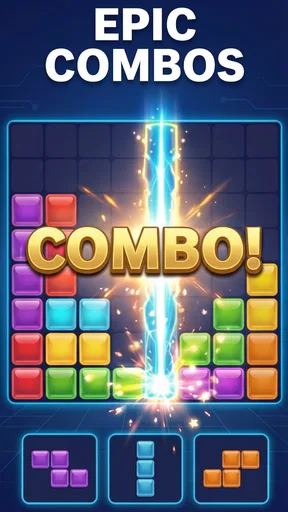
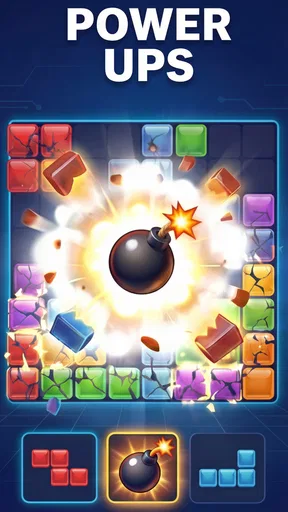
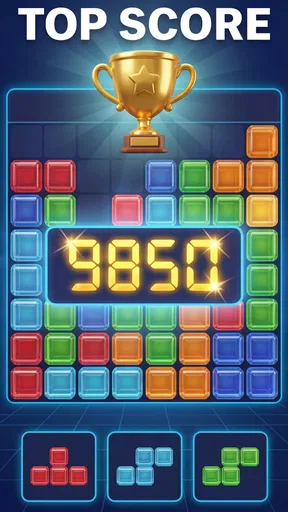
Our Review of Blockbuster: Arcade
 Analysis by Appyee
When I want a puzzle game that I can understand immediately, I usually care less about a complicated story and more about whether the first few minutes feel satisfying. Blockbuster: Arcade takes that direct approach: it is a free block-busting puzzle game from Gimica GmbH, designed for short breaks but comfortable enough for longer sessions. I found it easy to start, easy to pause mentally, and difficult to put down once I began looking for a cleaner move.
The game sits in the arcade-puzzle space rather than trying to be a large adventure or a deep strategy title. That distinction matters. It is aimed at players who enjoy arranging, clearing, and reacting to blocks, not at people looking for character development, exploration, or a long campaign. The store summary describes it as endless, and that is the right way to approach it: this is a repeatable activity built around the pleasure of making progress one move at a time.
It is available free of charge, with optional in-app purchases ranging from $0.99 to $4.49 per item. The age rating is Everyone, so it is a natural choice for a broad audience. Its current version is 1.9.0, and it requires Android 7.0 or later. On the Android store, it has reached more than a million installs, with an average rating of 4.6 from roughly forty-six thousand ratings and about one thousand six hundred written reviews. Those figures suggest that the simple format is connecting with a substantial audience, although popularity alone does not make every puzzle game a good fit for every player.
How I would decide whether it belongs on your phone
I’d judge its place on your phone by whether you still reach for it once the easy first-session appeal has passed. I’d also notice whether a short round feels like a satisfying break or just another run without a clear stopping point. That distinction helps separate a useful repeat-play puzzle from one that only feels fresh at first.
The right question is not whether it is complex
The first decision is about the kind of attention you want to give a game. Blockbuster: Arcade works best when you want a focused activity without a learning period. You can pick it up while waiting for an appointment, during a short commute, or when you have a few quiet minutes after finishing a task. The appeal comes from recognizing useful placements and turning a limited board into a better one, rather than from learning a large collection of rules.
That simplicity is a strength, but it also sets a ceiling. If you prefer puzzle games with elaborate level design, a story, hidden objectives, or a strong sense of completion, this may feel too open-ended. An endless format can be relaxing because there is no pressure to finish a chapter, yet it can also feel less meaningful if you need clear milestones. I would choose it for repeatable play, not for a traditional beginning, middle, and end.
What I look for during the first session
In the opening session, I pay attention to three things: whether the board is readable, whether each placement feels deliberate, and whether the game makes me want to try one more round. This title is strongest when those three elements line up. The block-busting idea gives each move a visible purpose, so even a short session can feel complete when a good arrangement clears space.
A useful test is to play without trying to chase a personal best. Instead, focus on preserving room and avoiding moves that leave awkward gaps. That approach reveals whether you enjoy the central decision-making or only the immediate clearing effect. If you find yourself naturally planning around future pieces, the game has probably found its audience in you. If every move feels interchangeable, a more structured puzzle alternative may hold your attention better.
Why the endless format changes the decision
Endless puzzle games are governed by rhythm rather than destination. I can play cautiously for a while, then take a risk when the board becomes crowded. That makes the experience flexible, but it also means the game depends heavily on my own goals. I have to decide whether I am practicing cleaner placements, extending a run, or simply relaxing.
This is one of the less obvious trade-offs. A level-based puzzle can tell me what success looks like; an endless board asks me to create that purpose myself. For some players, that freedom is exactly what makes the game useful during a busy day. For others, it can make a session feel unfinished even after a strong performance.
Three practical ways to play more intelligently
My first tip is to treat open space as a resource, not as empty decoration. A move that clears blocks immediately is not always the best move if it leaves the remaining area divided into small, unusable pockets. I get better results when I consider how much flexible room will remain after the placement, especially when the board starts to fill.
My second tip is to separate “safe” moves from “productive” moves. A safe move keeps the board alive, while a productive move creates a better chance of clearing several blocks soon. When the board is comfortable, I look for productive placements. When space is tight, I prioritize flexibility instead of forcing a flashy clear. This small change makes the game feel more like planning and less like reacting.
My third tip is to use short sessions as practice rather than assuming every round needs to be a record attempt. Playing for a few minutes with one goal, such as avoiding isolated gaps, helps me notice patterns that disappear when I am rushing. It is a particularly useful routine for players who normally place pieces quickly and then blame the board for an avoidable dead end.
Where this game wins against familiar puzzle categories
Compared with match-based puzzle games, Blockbuster: Arcade feels less dependent on scanning for a particular color or symbol. Compared with word puzzles, it asks for spatial judgment instead of vocabulary. Compared with classic falling-block games, its appeal is less about rapid reflexes and more about choosing where a piece belongs before the situation becomes difficult. I would not call it a replacement for all of those categories, but it offers a calmer middle ground.
That difference is important for people who like puzzle games but do not want a timer-driven experience. I can think through a placement and enjoy the board’s gradual transformation. The game still has tension because poor decisions reduce future options, yet the pressure comes from the layout rather than from constant speed. For a player who wants an arcade flavor without making every round a test of reaction time, this is one of its clearest advantages.
The best everyday use case
Imagine finishing lunch with ten minutes before the next meeting. I would not start a story-heavy game in that window because I would be thinking about stopping before the session had properly begun. Here, I can open the game, make a few considered placements, and stop when the time is up. The session does not require preparation, and the basic objective remains understandable even if I have not played since the previous day.
It also works well as a mental reset after repetitive work. I like that the board gives me a small problem that is separate from whatever I was doing before. The benefit is not that the game becomes a productivity tool; it is that the limited puzzle focus can help mark a clean break. Players should still avoid treating any game as automatically relaxing, though. If chasing a high score makes you tense, playing conservatively is a better way to use it.
What may frustrate experienced players
The same accessible design that helps newcomers can disappoint players who want increasingly intricate mechanics. An endless block puzzle can remain enjoyable through better decisions, but it may not provide the dramatic variety found in games built around distinct stages, special abilities, or changing objectives. I would be cautious about recommending it as a main game for someone who needs constant novelty.
There is also a personal discipline issue. Because the core action is easy to repeat, it can become a default habit rather than a deliberate choice. I recommend setting a natural stopping point before starting, especially if you are playing during a break. The game is well suited to quick sessions, but its repeatable structure can make a short pause stretch longer than intended.
How the free model affects the choice
The free entry point makes trying the game straightforward. I can decide whether the block-clearing loop suits me without committing money first. Optional purchases between $0.99 and $4.49 per item may appeal to players who want to spend on the experience, but I would judge the game initially on its basic play rather than on anything optional.
This is another reason to compare it with alternatives by category instead of by price alone. A paid puzzle game may offer a more controlled, uninterrupted experience, while another free game may lean more heavily on events or collection systems. Blockbuster: Arcade makes sense when I want a low-commitment download and a central puzzle loop. It is less compelling if my priority is a premium-style package with a defined campaign and no reason to think about optional spending.
Who should choose a different kind of puzzle game
I would point story-focused players toward a narrative puzzle adventure instead. Someone who enjoys discovering characters, locations, and plot consequences will probably find the endless structure too bare. Likewise, competitive players who want rankings, timed challenges, or a highly demanding reflex test may prefer a game designed around those pressures.
It may also be the wrong choice for people who need accessibility details before installing. The age rating is Everyone, which makes the audience broad, but that rating alone does not tell me whether every visual, touch, or pacing preference will be satisfied. If you have a specific accessibility requirement, check the current device experience before replacing a game you already know works for you.
The cost of switching from another puzzle game
Switching to this game is easy if your current favorite is a casual block or spatial puzzle. The rules are close enough in spirit that I do not need to rebuild my entire approach. The real adjustment is psychological: I have to stop expecting a fixed level objective and start judging the quality of my board over time.
The switch is less attractive if you are deeply invested in a progression system elsewhere. A game with chapters, unlockable themes, or carefully staged challenges gives you a visible record of advancement. Here, the reward is more immediate and personal. I am improving my decisions, not necessarily moving through a large content map. That can feel refreshing for a casual player and underwhelming for a completionist.
There is also a time cost to changing habits. If you already have a puzzle game that fits your commute, understands your preferred controls, and never leaves you wanting more structure, Blockbuster: Arcade does not automatically replace it. I would install this one as a second option when I want a different pace, not delete a familiar favorite simply because this game is free.
What the developer’s update position tells me
Gimica GmbH lists version 1.9.0 as the current version. For me, that makes it sensible to keep the app updated through the normal store process, particularly because casual games can change in small ways that affect comfort and balance. I do not treat a version number as proof that every concern has been solved, but it does identify the edition I would be evaluating today rather than an early release.
The game was released on November 6, 2024, so it is a relatively recent entry rather than a long-established classic. That makes the large install base and strong average rating notable, but I would still keep expectations realistic: a newer puzzle title has less of a personal history for players than a decades-old standard. Its value comes from how well the current loop fits your routine, not from nostalgia.
My recommendation for different types of players
I recommend Blockbuster: Arcade to casual puzzle fans who want a clean, repeatable block-clearing activity, especially those who prefer planning over frantic tapping. It is a good candidate for a spare-time game because it does not ask me to remember a complex plot or maintain a long chain of objectives. The Everyone rating also makes it suitable for households looking for a broadly approachable puzzle option.
I would recommend trying it before spending anything. Give the free version enough time to answer one simple question: do you enjoy protecting space and improving placements even when there is no story pushing you forward? If yes, optional purchases become a personal choice rather than a requirement for discovering whether the game works for you.
I would not make it my first recommendation for players who need deep progression, narrative context, or a constantly changing challenge structure. Those players are better served by a level-based, story-led, or competition-focused alternative. The game’s strength is its narrow focus, and that focus is exactly what limits it.
My final verdict after using it as a daily break game
Blockbuster: Arcade succeeds because it understands the value of a small, repeatable puzzle. I can open it without preparation, make decisions that matter, and leave after a short session without feeling that I abandoned a larger task. The best moments come from seeing a crowded board become workable again through patience rather than speed.
Its limitations are equally clear. Endless play will not satisfy everyone, and players who want a strong progression path may run out of reasons to continue sooner than casual users. The optional purchase range means I would keep an eye on my spending habits, even though the game is free to start. Those are not deal-breakers for me; they simply define the audience.
My clear recommendation is to try it when you want a low-commitment spatial puzzle, not when you are searching for a complete adventure. If your ideal mobile game is something you can play during a short pause, improve through smarter decisions, and return to without remembering a complicated system, this one earns a place on your Android device. If you need narrative, elaborate progression, or a finish line, choose a different puzzle category instead.
Verdict
Strengths of Blockbuster: Arcade
- Large selection of classic arcade-inspired games
- Simple controls make most games easy to pick up
- Nostalgic presentation appeals to retro gaming fans
- Short sessions are convenient for playing on mobile
- Regular challenges can keep gameplay feeling fresh
Limitations of Blockbuster: Arcade
- Some content may require an internet connection
- Progression can feel repetitive after extended play
- Touch controls may be less precise than physical buttons
- Ads or in-app purchases may interrupt the experience
- Older devices may experience occasional performance issues
Other Releases by Gimica GmbH
View All


Similar Picks in This Category
View All
Block Blast!
HungryStudio4.8

Braindom: Brain Games Test
Lahana Game Studio4.6

AMAZE!
CrazyLabs LTD4.6

Sudoku - Classic Sudoku Puzzle
Oakever Games4.7

Art Puzzle - Puzzle Games
Easybrain4.8

Amaze GO!
Oakever Games4.9
Frequently Asked Questions
What is Blockbuster: Arcade?
Blockbuster: Arcade is a mobile entertainment app inspired by the classic Blockbuster brand, offering a collection of arcade-style games designed for quick and casual play. After testing the app, its main appeal is the nostalgic presentation, simple controls, and short game sessions. It is aimed at users who enjoy retro-style challenges rather than deep, story-driven gameplay or complex multiplayer experiences.
Is Blockbuster: Arcade free to download and play?
The app can generally be downloaded without an upfront purchase, but availability of advertisements, optional in-app purchases, or premium content may depend on the version and region. Before installing, users should check the store listing for current pricing details. Some features or game content may require additional purchases, so it is worth reviewing the payment information carefully if you want a completely free experience.
Does Blockbuster: Arcade require an internet connection?
An internet connection may be needed for the initial download, advertising, account-related functions, updates, or certain online features. However, some arcade games may remain playable offline once the required content has been installed. Offline availability can vary between individual features and versions of the app, so users who plan to play while traveling should test the games before relying on them without mobile data or Wi-Fi.
Is Blockbuster: Arcade suitable for children?
Blockbuster: Arcade is generally easy to understand and can be suitable for casual family play, but parents should still review the age rating and privacy information before allowing children to use it. Advertisements, optional purchases, external links, or online services may be included. To avoid accidental purchases, it is recommended that parents enable device-level purchase restrictions and supervise younger players during their first sessions.
What devices are compatible with Blockbuster: Arcade?
Compatibility depends on the operating system, device model, and the minimum version supported by the current release. Most recent Android and iOS phones and tablets should be able to run the app, although performance may differ on older hardware. Before downloading, check the official Google Play or App Store listing for system requirements, available storage, and any regional restrictions affecting installation or access.
Play our best games!


